
May 29, 2026
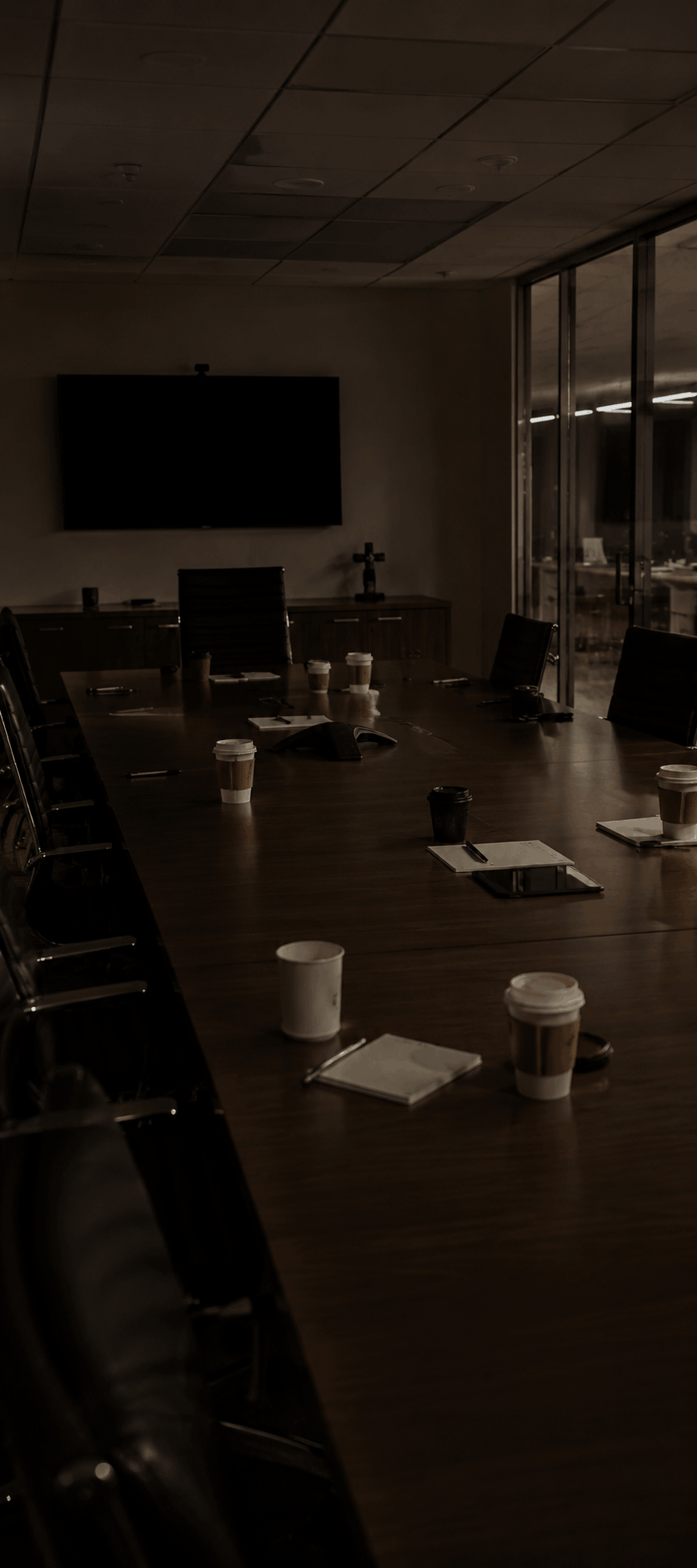
It turns out none of us actually work in the same office building.
The cleaning crew arriving at five-thirty in the morning knows a version of it that looks almost anatomical— which corners collect dust no matter what, which restrooms take the heaviest traffic, which executive suite has a recycling bin that functions mostly as a decorative object. They know the conference room that somehow always has coffee stains even though nobody ever seems to admit using it. For them, the building is a system of surfaces and routines, something to be managed into order before anyone else arrives.
By the time nine o’clock comes around, a completely different building takes over. This one is full of meetings, calendars, and small territorial negotiations—who sits where, which rooms are “good,” whether the third-floor coffee is actually better or just closer. None of it matches the morning version. It’s not even trying to.
The security guard doing his rounds at midnight knows a third building altogether - emptied out, settling into its own sounds, full of small details the daytime crowd never notices because they're too busy giving the place a personality. Which doors don't quite latch. Which elevator hesitates on the way to the fourth floor. Which offices go dark at six and which ones are still lit at eleven. If buildings dream, this is probably the shift that would notice.
Same address. Same carpeting. Radically different and equally accurate realities.
Nobody here is wrong about what they've seen. None of them has the whole picture either. And here's the part that's easy to miss: that's not going to change if they just pay closer attention. The limitation isn't effort. It's position.
As it turns out, this is also a fairly good description of philosophy. Different traditions keep wandering through the same building and reporting back from different floors.
There's a certain irony in the fact that some of the most useful thinking on this question is a few thousand years old - and that a significant portion of the modern self-help industry has built a comfortable living rediscovering it. Ancient philosophy turns out to be surprisingly good raw material. Stoicism in particular has had quite a run lately, showing up in productivity blogs, podcast discussions, and the reading lists of people who would never call themselves philosophers but recognized something real when they encountered it.
Which is fair. You don't get adopted by productivity bloggers, startup founders, military officers, and people trying to survive family holidays unless you're touching something real.
What Each One Is Actually Saying
Stoicism opens with an observation that is simple, useful, and slightly uncomfortable: most of what happens to you is not under your control. Other people's behavior, institutional outcomes, market movements, weather, illness, the precise moment a pigeon decides your car looks like a reasonable target - none of it is yours to direct. What remains yours, always, is your response. Your judgment. The inner posture you bring to whatever arrives.
The goal is to cultivate that inner ground so thoroughly that external turbulence stops having the power to destabilize you. It's worth remembering that Marcus Aurelius was managing an empire when he wrote his notes on this. Epictetus developed the philosophy while enslaved. These were not people looking for a better morning routine.
Taoism gets to a related place by a different route. Where Stoicism builds an inner fortress, Taoism suggests you become something that doesn't need one. The image that keeps coming back is grass in wind. The grass doesn't grit its teeth and brace against the storm. It bends - fully, without resistance - and when the storm passes, it returns. The flexibility is the resilience. Yielding isn't losing. It's the actual mechanism of persistence.
Contours of Tomorrow is less interested in the individual's inner experience and more interested in what happens between people - and between people and the larger systems they participate in without fully seeing. The core observation is that individual actions feed into collective patterns that nobody designed and nobody fully controls. Outcomes emerge from the accumulation of small inputs over time. The future takes shape through things that don't look like history while they're happening.
What Each One Does With Uncertainty
The Stoic response to uncertainty is essentially: get your interior in order. You can't know what's coming, so build the kind of stability that can meet whatever arrives without being undone by it. Fear-setting - carefully imagining the worst realistic outcome and thinking through what recovery might actually look like - is a genuine Stoic exercise. It works, which is probably why it keeps getting rediscovered by people who thought they were inventing something new.
The Taoist response flips the posture without necessarily flipping the outcome. Don't fortify against the storm. Be the thing the storm moves through. Uncertainty isn't a problem to solve - it's just the natural condition of anything alive. The appropriate response is fluidity rather than bracing.
CoT would add something neither quite gets to. Uncertainty isn't only a personal experience - it's a structural feature of complex systems. You are making inputs into something much larger than you can see from where you're standing. The outputs won't be entirely yours. That's not a reason for paralysis. If anything it's an argument for taking the small, ordinary, repeatable things more seriously - because those are the inputs that actually accumulate into something.
The Stoic holds steady. The Taoist bends and returns. CoT is watching what the whole system does with both of those responses over time - which operates at a scale that makes individual lifetimes look like a single note in a very long piece of music.
Where Each One Gets Into Trouble
Stoicism, pushed too far, can harden into something that mistakes endurance for wisdom. It's possible to get very good at not being destabilized without ever actually learning anything from the destabilization. Resilience is genuinely valuable. Imperviousness is a different thing, and not obviously better.
Taoism, pushed too far, can drift into a kind of elegant passivity - accepting everything so gracefully that it never quite pushes back on anything worth pushing back on. The grass bends and returns. But occasionally the thing blowing through deserves a response, and grass has limited options there.
CoT without the grounding of either can float off into abstraction - systems all the way down, emergence everywhere, small actions mattering in ways that are real but conveniently impossible to verify on any particular afternoon. Useful as a lens. Less useful as a reason to avoid deciding anything.
This is where the self-help instinct - despite occasionally sounding like it was assembled from motivational posters and caffeine - is genuinely onto something. At some point philosophy has to make contact with a specific Tuesday.
Tim Ferriss arrived at Stoicism through the same systematic curiosity that led him to deconstruct language acquisition, swimming, and competitive tango. He took it seriously enough to actually practice it rather than just cite it, which puts him ahead of a lot of people who reference Marcus Aurelius in their newsletters. His deeper interest has always been epistemological - not just what to learn but how learning actually works, how to find people who are genuinely extraordinary at something and extract the underlying principles. That's a more interesting project than the lifestyle optimization caricature sometimes suggests.
Where I part company with that general tradition is around his more recent enthusiasm for psychedelics as a path toward insight. Even at microdose levels. I'll be honest - I find the whole territory a bit squeamish-making. It's not mind alteration in general that gives me pause - a good single malt has never caused me any philosophical distress. It's the particular kind of disconnection psychedelics are known for. Somewhere underneath the intellectual curiosity sits a more fundamental concern: I'm not entirely confident I have a firm enough grip on reality that I'd risk that degree of separation. And more to the point - I'm not sure I'd make it back. That's not a moral position on what anyone else should do. It's just an honest read of my own structural situation.
What They Do For Each Other
Back in the building, nobody is wrong about what they've seen. The cleaning crew, the daytime crowd, the midnight security guard - each has a perfectly accurate picture. None of them has the whole thing. The mistake isn't in what they observed. It's in assuming their version is the complete one.
Stoicism keeps CoT from floating away. Systems are real, emergence is real, accumulation is real - but there's still a specific person in a specific moment making a specific call. The inner posture matters. You can't outsource every decision to emergence and call it wisdom.
Taoism keeps Stoicism from going brittle. Holding your ground internally is sometimes exactly right. Other times the ground itself needs to move. The grass that refuses to bend doesn't demonstrate resilience - it just snaps, which is a worse outcome than bending was.
CoT keeps nudging both toward the wider frame. The individual - whether holding steady or yielding gracefully - isn't the only unit of analysis. The system is doing something too. The accumulation is happening whether anyone is tracking it or not. The future is being shaped not just by how well people manage their inner states but by what those inner states lead them to actually do, repeatedly, over time, in the presence of other people doing the same.
It's systems all the way down. But someone still has to decide whether to send the email, make the call, apologize, plant the tree, wash the dishes, or finally schedule the dentist appointment they've been avoiding since February.
A full picture probably needs all three in the room. The Stoic reminding us that character matters. The Taoist reminding us that flexibility matters. CoT reminding us that neither one happens in isolation.
Ideally they're having this conversation over coffee on the third floor, where everyone agrees it's better, even if nobody can quite explain why.
The cleaning crew, of course, probably knows the real reason. They just aren't telling.